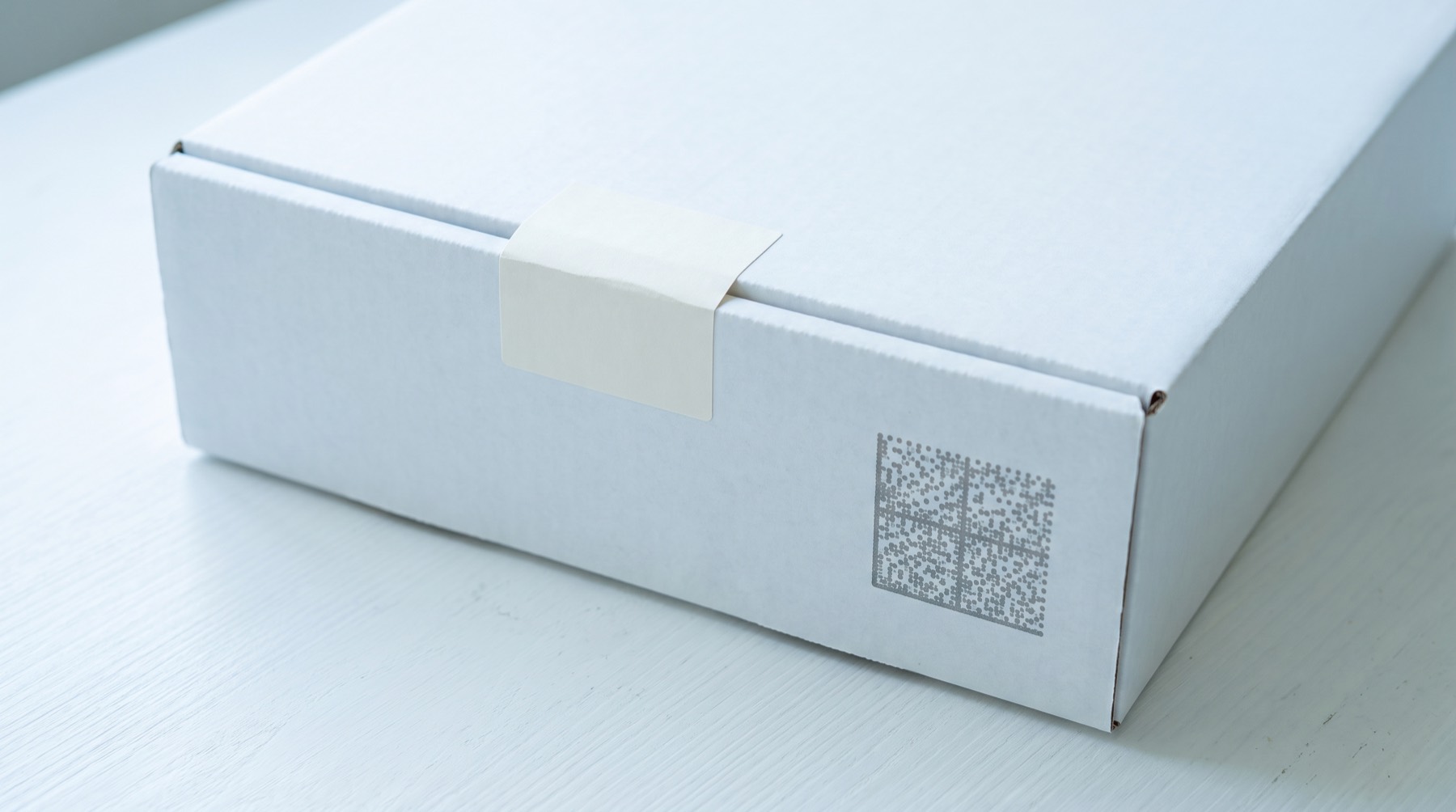
Genuine, intact, as described: how product authentication actually works
Most people who receive something that matters ask one question of it: is this real? It feels like a single question with a yes or no answer, and the packaging industry has spent decades selling features that seem to answer it at a glance. A shimmering foil. A code to scan. A seal that tears. Each of them is useful, and each of them answers far less than the person looking at it assumes.
The trouble is that "is this real" is really three questions folded together, and the evidence for each is different. An item can be genuine and have been opened. It can be sealed and unopened and still not be what the paperwork says. It can match the paperwork perfectly and still not be what its manufacturer ever made. Authentication done well keeps the three apart and asks each one on its own terms.
This guide walks through how that works in practice, in the order a careful receiver would meet it: what each of the three questions is and what answers it, why the difference between a lot code and a serial number decides what can be checked at all, how a scan-to-verify system works and where a perfect copy defeats it, what visible, hidden and laboratory-level security features are each for, why a seal records rather than prevents, what the pack itself can tell you, how to check a document with the organisation that issued it, and the limits no authentication step can cross.
1. Three questions that get asked as one
Separating them once makes everything later on this page easier to follow.
| The question | What can answer it | What cannot |
|---|---|---|
| Genuine: did the stated maker produce this item? | Unit-level codes checked with the maker, covert and forensic features, the documented chain of custody | A seal, however intact. Counterfeits arrive sealed too |
| Intact: has it been opened or altered since it left the maker? | Tamper-evident closures, the condition of the pack, adhesive and fold evidence | A verification code. A code on a refilled pack still verifies |
| As described: does the content match the label and the documents? | Independent analysis of the content, matched to the lot on the document | Anything on the outside of the pack, including every feature in the first two rows |
The right-hand column is the one worth rereading. Every common authentication failure is a feature from one row being trusted to answer the question in another.
The practical consequence is simple. When someone tells you an item "has been verified", the useful follow-up is: verified for which of the three. A clean scan result is evidence about the first question. An unbroken seal is evidence about the second. Neither says anything at all about the third, and the third is usually the one the buyer actually cares about.
2. Lot codes and serial numbers are not the same thing
Two kinds of identifier appear on most packs, and they are often printed side by side, which makes them easy to confuse.
A lot code, sometimes called a batch code, names a group. Everything made in one production run, from the same inputs, under the same conditions, shares it. Its purpose is to link the item back to the records of that run: when it was made, what went into it, what was measured, who released it. A lot might be a few dozen items or a few hundred thousand, and every one of them carries the identical code.
A serial number names one item. No two units share it. Its purpose is not to describe how the item was made but to make that specific unit individually traceable: where it was shipped, to whom, and whether it has been seen anywhere since.
A lot code can tell you what an item should be. Only a serial number can tell you whether this particular item has turned up somewhere it should not.
This matters for authentication because a lot code is, by design, shared. If a counterfeiter copies the lot code off one genuine pack, that code will look correct on every copy, because the maker really did produce a lot with that code. Checking it only confirms that the lot exists. A serial number, on the other hand, can be checked against a record of where that one unit went. A serial that was shipped to one distributor and scanned by a stranger on another continent is a question worth asking. A lot code on its own can never raise that question.
Many packs carry both, often encoded together in a single two-dimensional code alongside an expiry or production date. When you read one, it is worth knowing which field you are actually looking at.
3. How a scan-to-verify code actually works
The modern version of the serial number is the scan-to-verify code: a square code or a short string on the pack that you scan or type into a page, which then tells you whether the item is genuine. It looks like magic. It is a database lookup, and knowing that makes it much easier to judge.
At the point of manufacture, each unit is given a unique identifier, usually a long random string that cannot be guessed from its neighbours. That identifier is printed on the pack and recorded in a database held by the maker or by a service acting for them, along with whatever the maker chooses to attach: the product, the lot, the production date, the market it was shipped to. When you scan the code, your phone sends the identifier to that database, and the page you see is simply a report of what the database holds.
Three things follow from that, and all three are worth holding on to.
- The code proves nothing on its own. It is a key. The evidence is the record it unlocks, and the record is only as trustworthy as the organisation holding it.
- The page you land on is part of the evidence. If the code sends you to an address you cannot connect to the maker, you have learned nothing about the item and something about the code.
- The random string is doing real work. Sequential serials can be guessed. A long random identifier means a counterfeiter cannot invent a valid code; they can only copy one that already exists.
That last point leads directly to the weakness every scan-to-verify system has to deal with.
4. A perfect copy of a genuine code
A printed code is information, and information can be copied without loss. Photograph a genuine pack, reprint its code on a thousand fake ones, and every one of those thousand will scan successfully, because the code is real. The database cannot tell the difference between the original and a copy by looking at the code, because there is no difference to see.
What a well-designed system does instead is watch what happens after the first scan. The genuine item is normally scanned once, by the person who received it, somewhere near where it was shipped. A cloned code is scanned many times, by many people, often in different places. So a good verification page does not just say "genuine". It says something closer to:
- This code was first verified on a specific date. If that was not you, treat this item with caution.
- This code has now been checked a number of times.
- This code was recorded as shipped to a region that does not match where it is being scanned.
Each of those is more informative than a green tick. A code that reports it was already checked three weeks ago, when you only received the item this morning, is the single strongest signal a scan-to-verify system can give you, and it is the one most people scroll past.
Some makers go further and hide the code under a scratch-off layer, so the identifier is not visible until the pack is in the buyer's hands. That makes copying harder, because the counterfeiter needs to obtain and reveal a genuine code before anyone else does. It also means that a scratch panel already scratched when the item arrives is worth noticing before anything else.
5. Visible, hidden and forensic: three audiences

Security features on packaging fall into three broad groups, and the useful way to think about them is not by technology but by who is meant to check them.
Visible features, often called overt, are designed to be checked by anyone with their eyes and hands. Diffractive foils that shift colour as the pack tilts. Inks that change colour with viewing angle. Embossing, raised print and textures you can feel. Their strength is that nobody needs equipment or training. Their weakness is the same thing: anything designed to be recognised by eye can be imitated well enough to pass a casual look, and a buyer who has never seen the genuine feature has nothing to compare against. An imitation foil does not have to be good. It only has to be shiny.
Hidden features, often called covert, are designed to be checked by someone who knows they are there and has a simple tool. Print that only appears under ultraviolet light. Microtext, lines of lettering so small they read as a solid rule without magnification. Deliberate tiny errors or patterns in the artwork that only the maker knows to look for. They work because the counterfeiter often does not know they exist, and they stop working the moment the secret is widely known, which is why makers rarely describe them in public.
Forensic features are designed to be checked in a laboratory. Chemical or material markers added to an ink, a coating or the material itself, detectable only with specific equipment. They are the hardest to copy and the least useful to an ordinary receiver, because nobody at a receiving desk can check them. Their role is to settle a dispute afterwards, when a suspect item has already been set aside.
A serious scheme uses all three layers, and the layers are meant to be read in order. The visible feature is a first sort. The hidden one is a second look at anything that seems off. The forensic one is the final answer when it matters. Treating the visible layer as proof, which is what most people do, uses the weakest layer as if it were the strongest.
6. Tamper evidence records. It does not prevent
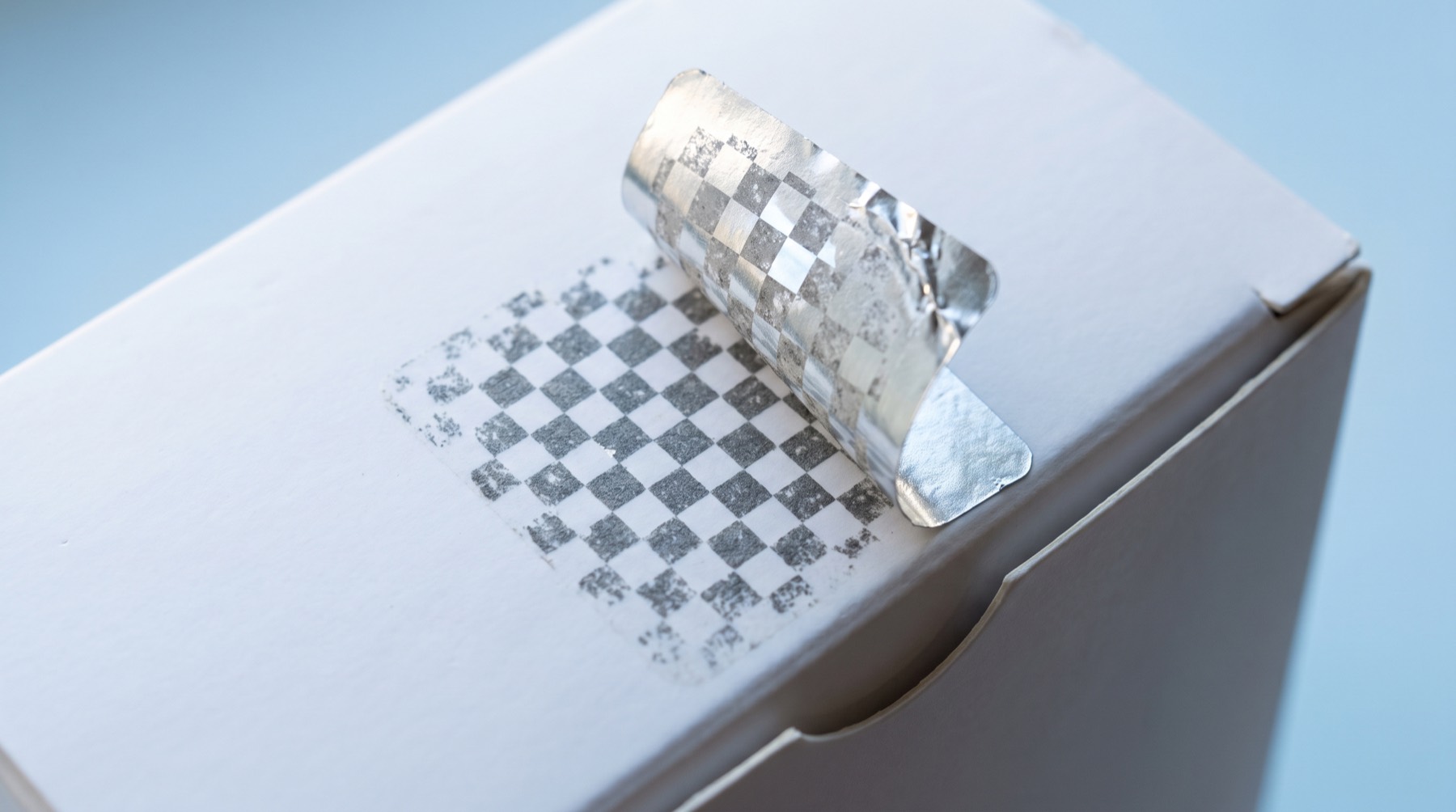
The word matters. Almost nothing on ordinary packaging is tamper proof. Given time and motivation, any closure can be opened. What good packaging offers is tamper evidence: a closure designed so that opening it leaves a mark that cannot easily be hidden afterwards.
The common forms each record a different kind of opening:
- Breakaway closures, such as a cap with a ring that separates on first turn, record that the closure has been turned at least once.
- Shrink bands and sleeves around a closure record that the band has been cut or slid off.
- Void labels record that a label has been lifted, by leaving a printed pattern on the surface and a matching gap in the label.
- Frangible labels, made of a film too brittle to peel in one piece, record removal by breaking into fragments.
- Glued or sealed carton flaps record opening through torn fibres and adhesive that no longer lines up.
Two limits apply to all of them. First, a seal is only evidence if you know what the intact version looks like. A receiver who has never seen the genuine closure cannot tell a resealed one from an original. Second, a seal says nothing about genuineness. A counterfeit can be sealed perfectly, with its own seal, on its own production line. An unbroken seal tells you that nobody opened this pack after its seal went on. It does not tell you who put it on.
This is why the table in section 1 puts seals firmly in the second row. They answer "intact". They are silent on "genuine".
7. The pack itself is evidence

Long before anyone scans anything, the pack carries a great deal of information in the way it was made. Genuine packaging comes off one set of equipment, with one set of artwork files, from one supplier of board and ink, and that consistency is hard to reproduce exactly.
The details worth comparing, ideally against a pack known to be genuine, are ordinary ones:
- Print registration. Whether colours line up precisely, or show a faint halo where one layer sits slightly off another.
- Typography. The same typeface, weight and spacing throughout. Copies are often reset from a photograph and drift in small ways, most visibly in numbers and in small print.
- Date and code formats. A maker prints dates and codes the same way every time. A different date order, a different font for the variable data, or a code printed by a different method is a real difference.
- Materials. The weight and finish of the board, the feel of the coating, the colour of the inside of the carton, the way a fold breaks.
- Construction. Where the glue flap sits, how the closure is formed, where the seal is placed.
None of these is proof on its own. Makers change suppliers, update artwork and move production, and a genuine pack from a newer run can differ from an older one. That is exactly why the most valuable tool here is not expertise but a reference sample: one pack of known origin, kept unopened, that later arrivals can be compared against side by side. Differences seen in comparison are obvious. The same differences seen in isolation are nearly invisible.
8. The paper trail: where the item has been

An item is only as trustworthy as the least documented step between its maker and its receiver. That sequence of hand-offs is called the chain of custody, and it is at least as important as anything printed on the pack.
In a clean chain, each step can be matched to the next. The maker's dispatch record names the lot, the quantity and the consignee. The carrier's record shows the shipment moving. The receiver's intake record shows it arriving, with the same lot and quantity, in the condition it left. When the records agree, the item's history can be reconstructed without trusting anyone's word.
Two patterns break the chain, and both are common. The first is substitution: a genuine shipment enters the chain and something else leaves it, often in genuine outer packaging that has been reused. The second is diversion: genuine items leave the channel they were meant for and re-enter somewhere else, sometimes after being stored in conditions nobody recorded. Diverted goods are genuine in the first sense of the word and can still be a problem, because the question of how they were kept on the way has no answer.
The practical test for any supply chain is whether the lot on the item, the lot on the invoice and the lot on the accompanying documents are the same, and whether anyone can show you the record that connects them.
9. The document can be forged too
Items usually arrive with paperwork: a certificate, a specification sheet, a report of some test. It is natural to treat the document as the authority and the item as the thing being checked. But a document is just another printed object, and it is considerably easier to fake than a pack. Changing a lot number or a date in a file takes seconds.
The defence is to verify the document with its issuer, not with the person who sent it. In practice:
- Check that the document names an issuer you can contact independently. Find their contact details yourself rather than using the ones printed on the page.
- Check that the lot on the document is the lot on the item. A real document for a different lot is not evidence about this one.
- Where the document carries a code or link for verification, look carefully at where it leads. A convincing page on an address that differs from the issuer's own by one letter is the oldest trick there is.
- Where the issuer keeps a lookup of their own reports, use it. A report that the issuer's own system cannot find is a report the issuer did not produce.
- Check that dates make sense in sequence. A report dated before the lot was made, or a lot made after its stated expiry date was set, is not a clerical oddity.
None of this implies bad faith on the part of whoever sent the document. Most people forwarding paperwork have not checked it themselves either. That is exactly why the check has to happen at the end of the chain, by whoever is going to rely on it.
10. What authentication cannot tell you
Everything described so far operates on the outside of the item: its pack, its codes, its seals, its paperwork and its route. All of it together can build a strong case that an item is genuine and unopened. None of it can establish two things.
The first is condition. An item can be genuine, sealed and fully documented and still have been left somewhere too warm, too damp or too bright for too long on the way. Packaging cannot record that, unless it carries an indicator specifically designed to, and most do not. Condition is a property of the journey, and the journey's evidence lives in storage and transit records, not on the label.
The second is content. Whether what is inside matches what the label and the documents say can only be established by examining the content itself, with an independent analysis, matched to the same lot. Authentication narrows the question and makes the paperwork meaningful. It never replaces the analysis.
Authentication tells you whose item it is and whether anyone has been inside it. It does not tell you what is inside.
11. When something looks wrong
Most discrepancies turn out to be innocent: a new artwork version, a new carton supplier, a label applied by hand at a warehouse. The goal of a good response is to find out without destroying the evidence that would settle it.
- Set the item aside. Keep it separate from other stock so it cannot be mixed back in.
- Do not open it further. An unopened suspect item can be examined. An opened one mostly cannot.
- Photograph everything. All sides of the pack, the codes, the seals, the documents, and the outer shipping packaging with its labels.
- Keep all packaging, including the outer carton, the fill and the carrier label. The route an item took is written on what it arrived in.
- Record the lot, the serial and the date received, and scan the code if there is one, noting exactly what the verification page says, including any previous scans.
- Contact the maker directly, using details you found yourself, and give them the identifiers. They can see things in their records that you cannot.
12. Eight things that should slow you down
- A verification page that says the code was already checked, before you received the item.
- A scratch panel already scratched, or a code visible that should have been hidden.
- A verification link that leads somewhere you cannot connect to the maker, or to an address one letter away from theirs.
- A lot on the document that differs from the lot on the item, however small the difference.
- A seal that looks right but sits in a different place or at a different angle from a known genuine pack.
- Variable data printed by a different method, such as a label where the maker normally prints directly, or a different font for the date.
- Outer packaging that has been reused, with old labels removed or covered.
- A document offered as the only evidence, with no way to confirm it with the issuer.
13. A ten-point receiving check
- Is the outer shipping packaging intact, and does its label match the dispatch record?
- Does the quantity received match the quantity shipped?
- Is every tamper-evident closure intact, and does it look like a known genuine one?
- Does the pack match a reference sample in print, typography, materials and construction?
- Are the lot on the item, the lot on the invoice and the lot on the documents the same?
- If there is a serial or verification code, what exactly does the verification page report, including earlier scans?
- Does the verification page belong to the maker, and can you confirm that independently?
- Can the accompanying document be confirmed with its issuer, using contact details you found yourself?
- Is there any record of how the item was stored and transported, and does it cover the whole route?
- Has anything been noted, photographed and recorded before the item moves on?
None of these steps needs special equipment, and none of them is an accusation. They are simply the questions that turn "it looked fine" into a record someone else can check later. Most of the time every answer will be the expected one, and that is the point: a check that almost always passes is what makes the rare failure visible.